A static checklist confirms that a security control exists, but it offers zero evidence that the control actually functions when your organisation is under pressure. Proving ISO 27001 control effectiveness requires more than a tick-box exercise; it demands a transition from manual spreadsheets to automated, defensible proof. Most compliance teams are currently drowning in disconnected Jira tickets and fragmented data that lack any real-world context. You likely recognise the mounting anxiety of an external audit where "patchy" evidence trails threaten your certification status, despite your team's exhaustive efforts to maintain order.
This guide demonstrates how to leverage automated validation to move your ISMS from a passive record to a proactive, disciplined system. By adopting these methods, you can provide ironclad proof for ISO/IEC 27001:2022 audits whilst eliminating the manual burden of evidence collection. We will explore how to implement a streamlined validation process that replaces administrative tracking with real-time, board-level reporting and automated evidence binding to ensure your controls are both present and performing. Learn how to transform your compliance posture into a strategic asset that delivers total audit assurance.
Key Takeaways
- Transition from passive checklists to a validated execution model that meets the rigorous demands of the current regulatory environment.
- Identify the systemic failures of general-purpose tools like Jira and spreadsheets, which often lack the traceability and context required for high-stakes audits.
- Implement a continuous validation loop for proving ISO 27001 control effectiveness, ensuring every security measure is supported by real-time, objective evidence.
- Build a robust framework by mapping specific controls to validated activities and enforcing strict separation of duties at the point of execution.
- Utilise orchestration to centralise your ISMS data, replacing the stress of manual evidence gathering with automated, auditable certainty.
The Evolution of ISO 27001: Why Proving Control Effectiveness is Non-Negotiable
The transition period for ISO/IEC 27001:2022 concluded on 31 October 2025. In the current regulatory climate, UK organisations face an audit environment that no longer accepts the mere existence of a security policy as sufficient evidence of compliance. Auditors have shifted their focus from static, point-in-time snapshots to continuous, validated execution. This shift moves the goalposts from administrative tracking to a model where proving ISO 27001 control effectiveness is the definitive benchmark for certification. You can't rely on a "check-box" approach when the standard now demands objective proof that controls operate as intended over time; as such, it is the ideal moment to explore ISO 27001 Certification Readiness to ensure your system is fully aligned.
Strategic urgency is mounting for UK enterprises to move beyond manual spreadsheets. Traditional methods fail because they provide an "existence" trail rather than an "effectiveness" trail. A spreadsheet might show a control was reviewed in June, but it cannot prove the control functioned correctly during a breach attempt in August. Modern governance requires an evidence-based management style where data is inextricably bound to the control outcome. To achieve this level of technical assurance, you can learn more about OAD Technologies and their specialised enterprise cybersecurity solutions. This transition from passive record-keeping to active validation is the only way to eliminate the anxiety of "patchy" evidence trails during high-stakes external audits.
Understanding Clause 9.1: Monitoring and Measurement
Clause 9.1 is the engine room of a modern ISMS. It dictates that an organisation must determine what needs to be monitored, who is responsible, and how the results will be evaluated. The core requirement here is reproducibility. Auditors look for results that are comparable and consistent, which is nearly impossible to achieve through manual Jira tickets alone. In the "Check" phase of the PDCA cycle, you must validate the underlying activity. Simple metrics like "90% of staff completed training" are insufficient; you must demonstrate how that training influenced security behaviour and reduced risk incidents. Without this level of detail, your monitoring remains a superficial exercise in data collection rather than a robust validation of performance.
The Shift from Existence to Effectiveness
A policy document for access control is merely a statement of intent. An effective control is the technical validation that the policy was enforced on every login attempt throughout the reporting period. For technical controls, effectiveness is measured through automated logs and real-time alerts. For organisational controls, it involves ISO 27001 Control Mapping that links human processes to verifiable outputs. Senior leadership now plays a critical role in this shift. Boards require reporting that reflects real-time control health rather than historical narratives. They need to see that the organisation isn't just "compliant" on the day of the audit, but resilient every day of the year. This demands a disciplined system that enforces accountability by design, ensuring that every control is a functioning barrier against threat actors.
The Mechanics of Automated Control Effectiveness Testing
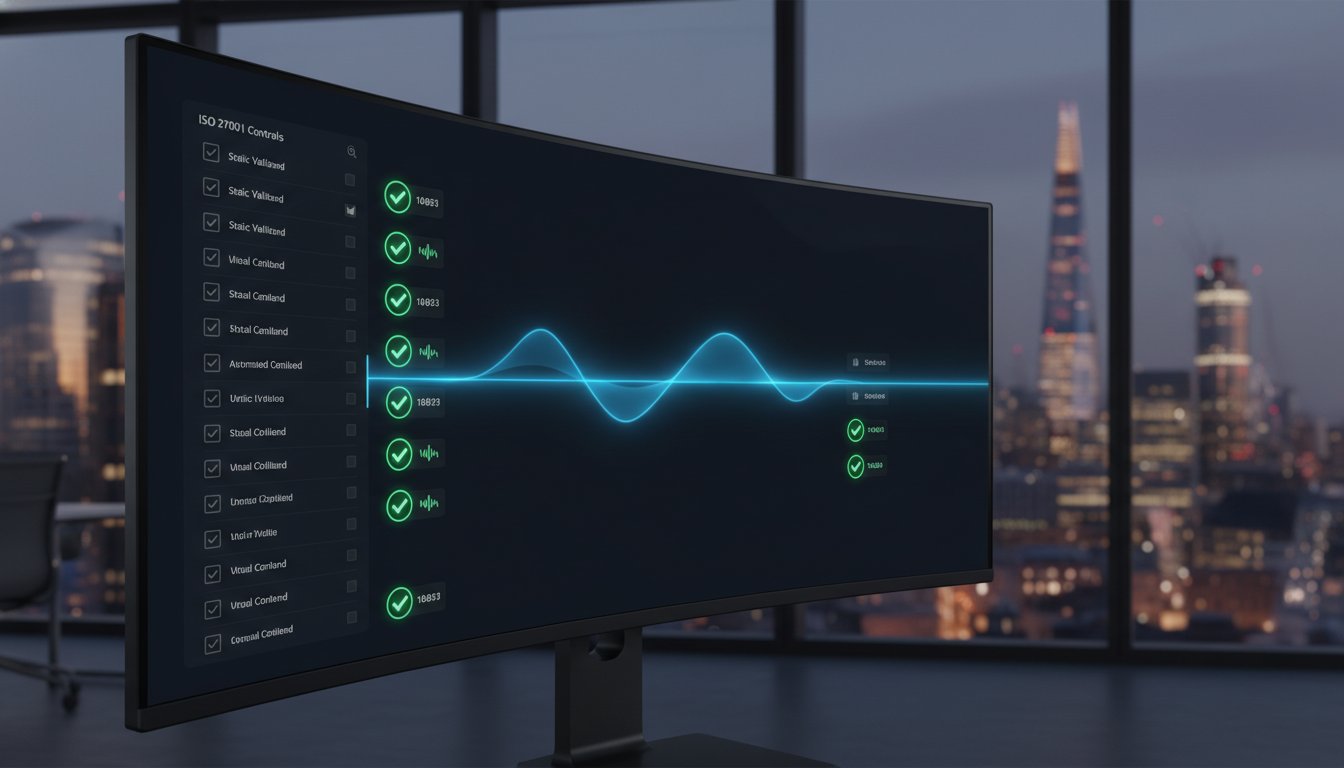
Automated control effectiveness testing functions as a continuous validation loop. It replaces the traditional "audit season" with a permanent state of readiness. Instead of manually sampling data once a year, an automated system interrogates your environment daily to confirm that security measures are performing as designed. This method moves beyond anecdotal evidence, proving ISO 27001 control effectiveness through immutable data points rather than manual recollections. You eliminate the "fragmentation trap" by ensuring that evidence is not just collected but is also contextually bound to a specific control outcome.
Identify which of the 93 controls in ISO/IEC 27001:2022 are prime candidates for this rigour. Technical controls such as access management, encryption, and logging are obvious choices. However, organisational controls also benefit from automation. For instance, 73% of certified organisations find control A.5.9 (inventory of information and other associated assets) the most difficult to maintain, according to ISMS.online. Automating the discovery and classification of these assets ensures the inventory remains accurate without human intervention. This reduces the risk of "patchy" evidence trails that frequently lead to major non-conformities during external audits.
Binding evidence is the process of inextricably linking a verified activity to a control requirement. When a system automatically captures a log entry or a configuration change, it creates a defensible reality that auditors can verify instantly. This level of traceability removes human error from the equation. You no longer rely on a distracted administrator to remember to upload a screenshot to a Jira ticket. The system enforces discipline by design, capturing the proof at the point of execution.
Translating Obligations into Execution Activities
Break down Annex A controls into actionable, repeatable tasks. You must define a clear "definition of done" for every compliance activity to ensure consistency. Standardise these workflows so that every team member follows the same rigorous process. By mapping technical standards directly to operational tasks, you create a seamless reporting structure. This translation ensures that high-level policy obligations are met through granular, verifiable actions that leave no room for interpretation by auditors.
Real-Time Monitoring vs. Periodic Testing
Periodic testing is a reactive strategy that leaves your organisation vulnerable to control drift. Continuous monitoring identifies failures the moment they occur, allowing for immediate remediation before a breach happens. This proactive approach integrates automated alerts directly into your risk management framework. It transforms your security posture from a series of static snapshots into a dynamic, resilient system. To see this in practice, you can orchestrate your control validation to achieve total auditable certainty whilst reducing the burden on your internal teams.
Why Spreadsheets and Jira Fail the ISO 27001 Effectiveness Test
General-purpose tools like Jira and Excel are designed for flexibility, which is the functional antithesis of the rigid discipline required for regulatory compliance. Whilst these platforms excel at project management, they inevitably lead to a "fragmentation trap" when used for governance. They track tasks but fail at proving ISO 27001 control effectiveness because they lack the underlying validation of the security outcome. Relying on disconnected tickets creates a superficial layer of activity that often crumbles under the scrutiny of a professional auditor.
A significant deficiency in standard task managers is the absence of an auditable "Separation of Duties" at the point of execution. In a typical Jira workflow, the individual responsible for performing a security task is often the same person who marks it as complete. This lacks the independent verification required by ISO/IEC 27001:2022. Auditors recognise this as a systemic risk. Without a built-in maker-checker model, the integrity of your evidence is compromised, suggesting that your controls exist in name only rather than as effective barriers.
Manual reconstruction of evidence is another major red flag. If your team spends weeks before an audit "gathering" screenshots and logs, you are not demonstrating a functioning ISMS; you are performing a forensic recovery of lost data. This process is expensive and prone to error. Research indicates that the cost of an ISO 27001 internal audit for a small to medium-sized company ranges between £4,000 and £12,000. Much of this cost is swallowed by the manual labour required to bridge the gap between abstract policy and concrete proof. Large organisations face even higher hidden costs as they scale these inefficient, manual processes across multiple departments.
The Problem with Jira for Compliance
Jira is an execution tool, not a validation system. It lacks immutable audit trails; tickets can be edited, deleted, or backdated, which undermines the "defensible truth" auditors require. Linking a specific ticket to a regulatory obligation is often a manual, error-prone mapping exercise. Because Jira does not natively bind evidence to the control outcome, it provides no real-time visibility into your actual security posture. It tells you that a ticket was closed, but it doesn't prove the control actually worked.
Excel: The Silent Killer of Audit Readiness
Spreadsheets are the primary source of "stale" evidence. Version control issues are rampant, and the inability to enforce complex workflows or duty separation in a simple grid makes Excel a dangerous choice for GRC. Manual data entry invited human error, which directly reduces auditor trust. When you present a spreadsheet as your primary evidence source, you are essentially asking the auditor to trust your transcription skills rather than the actual performance of your security programme. This reliance on manual tracking is a legacy habit that modern ISO 27001 Control Mapping seeks to eliminate.
Building a Robust Framework for Proving ISO 27001 Control Effectiveness
Orchestrating a high-integrity ISMS requires a transition from abstract policy to a disciplined framework of execution. You cannot rely on the hope that staff will follow procedures; you must design a system that enforces compliance by default. Building a robust framework for proving ISO 27001 control effectiveness involves a five-step logical progression that moves your organisation from passive tracking to definitive, evidence-based proof.
- Step 1: Map every control to a specific, validated activity. Use ISO 27001 Control Mapping to link Annex A requirements directly to operational tasks. This ensures no control exists in isolation without a corresponding execution path.
- Step 2: Enforce separation of duties at the point of execution. Eliminate the risk of self-certification. Ensure that the individual performing a security task is never the same person validating its completion.
- Step 3: Capture evidence automatically as a byproduct of the activity. Remove the manual burden of screenshots. The system should harvest logs, timestamps, and configuration data the moment a task is finished.
- Step 4: Bind evidence to the outcome to create an immutable record. Link the captured data contextually to the specific control requirement. This creates a defensible reality that auditors can verify without manual reconstruction.
- Step 5: Generate regulator-ready reports directly from execution data. Replace historical narratives with real-time health checks. Your reports should reflect the actual state of your controls as of this minute, not as of last quarter.
To see how these steps translate into a high-integrity environment, request a demo of our orchestration platform and replace audit anxiety with total assurance.
Establishing the Chain of Custody for Evidence
Evidence must survive rigorous legal and regulatory scrutiny to be considered valid. You must establish a clear chain of custody that proves the integrity of your data from the moment of capture. This involves defining precise roles: the executor who performs the task, the validator who confirms the outcome, and the auditor who reviews the process. Maintaining this integrity across borders is vital for UK enterprises operating in multiple jurisdictions. By using a system that enforces these roles by design, you ensure that evidence is tamper-evident and remains a reliable source of truth throughout the certification cycle.
Orchestrating the Compliance Workflow
Proactive orchestration ensures that every stakeholder understands their specific compliance obligations. You must move away from "reminders" and toward a system that drives action. When a control fails or drift is detected, the workflow should automatically trigger remediation tasks. This closed-loop system prevents minor issues from escalating into major non-conformities. It transforms compliance from a seasonal burden into a continuous, business-as-usual process. Every action taken is recorded, providing a transparent audit trail that demonstrates your organisation's commitment to the disciplined management of information security.
Achieving Auditable Certainty with CWORT’s Orchestration Engine
CWORT serves as the definitive single source of truth for your ISMS, shifting the focus from administrative tracking to strategic assurance. It replaces the frantic manual reconstruction of evidence with a system of automated proof that is captured at the point of execution. By centralising your compliance data, CWORT ensures that proving ISO 27001 control effectiveness is no longer a retrospective struggle but a continuous, real-time reality. This platform enforces the discipline required to maintain certification whilst providing the structural integrity that auditors demand.
A core differentiator of the platform is its technical enforcement of the "Separation of Duties" (SoD). Unlike general-purpose task managers where a user can self-certify their own work, CWORT mandates independent validation for every critical control activity. This built-in maker-checker model ensures that every piece of evidence is objective and defensible. It eliminates the risk of human bias or error, providing a level of auditable certainty that spreadsheets simply cannot match. You aren't just recording that a task was done; you're proving it was done correctly and verified by the appropriate party.
Board-Level Reporting and Audit Readiness
Senior leadership requires more than just a confirmation that a policy exists. CWORT generates real-time dashboards that provide a granular view of control health across the entire organisation. This transparency allows the board to move from a state of anxiety to one of informed security. By providing auditors with a "read-only" window into your validated execution, you can significantly reduce the time spent on external audit preparation. This streamlined access allows your team to focus on strategic risk management rather than forensic data gathering, replacing weeks of manual labour with instant, auditable proof.
Beyond ISO 27001: Multi-Framework Orchestration
The modern regulatory environment in the United Kingdom is increasingly complex, with overlapping requirements from DORA, NIS2, and the UK NIS Framework. CWORT leverages ISO 27001 Control Mapping to allow for "test once, comply many" orchestration. When you validate an ISO 27001 control, the system automatically maps that evidence to the corresponding requirements in other frameworks. This unified approach reduces duplication of effort and ensures consistent compliance across your entire regulatory portfolio. Ready to eliminate manual chaos? Request a CWORT demo today.
Secure Your Certification Through Orchestrated Validation
Transitioning from fragmented spreadsheets to a disciplined orchestration engine is the only way to meet the rigorous demands of ISO/IEC 27001:2022. You've seen how manual reconstruction creates systemic risk whilst automated testing builds a defensible reality. By proving ISO 27001 control effectiveness through continuous monitoring, you eliminate the audit anxiety that plagues traditional compliance models. This shift replaces the chaos of "patchy" evidence trails with the calm of auditable certainty.
CWORT provides the structural integrity your organisation requires. It's purpose-built for DORA, NIS2, and ISO 27001 compliance; it enforces separation of duties by design and produces regulator-ready audit trails automatically. Stop drowning in disconnected tickets and start delivering strategic assurance to your board. Request a demo of the CWORT compliance validation platform to transform your ISMS into a proactive, resilient asset. You can achieve total auditable certainty and navigate the evolving regulatory landscape with absolute confidence.
Frequently Asked Questions
What is the difference between control monitoring and control testing?
Control monitoring is the continuous observation of a security measure to ensure it remains operational and within defined parameters. In contrast, control testing is a formal, periodic evaluation that verifies whether the control is achieving its intended objective against a specific standard. Monitoring identifies performance drift in real time, whilst testing confirms that the control design remains effective for proving ISO 27001 control effectiveness during an audit cycle.
How does automated control effectiveness testing improve ISO 27001 audit results?
Automation eliminates the "fragmentation trap" by providing auditors with a continuous, immutable stream of evidence rather than disjointed, manual snapshots. It replaces subjective human recollections with objective system data, significantly reducing the likelihood of major non-conformities caused by missing or "patchy" evidence trails. This disciplined approach demonstrates a high level of professional maturity and ensures that your organisation's security posture is always ready for external scrutiny.
Can I use Jira to prove ISO 27001 control effectiveness?
Jira functions effectively as a task execution platform but fails as a validation system because it lacks immutable audit trails and built-in separation of duties. Tickets can be edited or backdated, which undermines the "defensible truth" required by auditors. Whilst Jira tracks that a task was marked as "done," it cannot provide the independent, system-generated proof needed to confirm that the security control actually performed as intended.
What types of evidence do auditors trust most for ISO 27001 compliance?
Auditors maintain a high level of trust in system-generated, tamper-evident data that is captured at the point of execution. This includes automated logs, configuration files, and cryptographic hashes that prove the integrity of the evidence. Manual screenshots and self-certified spreadsheets are increasingly viewed with scepticism. Auditors prefer a clear chain of custody that demonstrates a rigorous, orchestrated process where evidence is inextricably bound to the control outcome.
How often should I test the effectiveness of my ISO 27001 controls?
The frequency of testing should be determined by the risk profile of the control and the rate of change within your environment. High-risk technical controls, such as access management, benefit from continuous automated testing to identify failures immediately. Lower-risk organisational controls may only require quarterly or bi-annual validation. Clause 9.1 of the standard dictates that your monitoring and measurement results must be comparable and reproducible to be considered valid.
What is evidence binding in the context of regulatory compliance?
Evidence binding is the process of contextually linking a verified activity or data point directly to a specific regulatory obligation. This ensures that every log entry or configuration change serves as definitive proof of a control's performance. By binding evidence to the outcome, you create an immutable record that eliminates the need for manual reconstruction. This level of traceability is essential for proving ISO 27001 control effectiveness to sophisticated external auditors.
How do I handle a control that is found to be ineffective during testing?
Identify the root cause of the failure immediately and initiate a formal remediation workflow. You must document the failure, the corrective actions taken, and the subsequent re-test results to demonstrate a functioning Plan-Do-Check-Act (PDCA) cycle. Auditors often view a well-documented failure and remediation process more favourably than a perfect record with no evidence of internal oversight, as it proves your monitoring system is actually working.
Does ISO 27001:2022 require automated evidence collection?
The standard does not explicitly mandate automation, but the increased complexity of the 93 controls in the 2022 version makes manual management practically impossible for modern enterprises. Clause 9.1 requires organisations to produce comparable and consistent results for monitoring and measurement. Given the high stakes of today's regulatory environment, automation is the only reliable method to achieve the level of rigour and traceability required for successful certification and long-term resilience.

Article by
Michael Iyiola
Michael Iyiola is a cybersecurity and AI engineering specialist with deep experience in vulnerability management, detection engineering, and operational resilience. At CWORT, he designs scalable, evidence-driven workflows that help teams meet modern regulatory and security demands.
Disclaimer
The content on this site is provided for general information and educational purposes only. It does not constitute legal, regulatory, financial, or professional advice. CWORT provides AI-assisted insights and workflow automation, but all compliance decisions remain the responsibility of your organisation and its management. Always seek qualified legal or regulatory guidance for decisions relating to DORA, NIS2, ISO 27001, CAF, or other obligations.